
Anaerobic Digestion
The Anaerobic Digestion (AD) category groups facilities that biologically treat suitable organic wastes in oxygen-free conditions to generate biogas and digestate. This category in WikiWaste focuses on waste-based AD plants rather than those based purely on agricultural crops or farm slurries without a clear waste link.
Facilities in this category typically treat food waste from households and businesses, sewage, slurries and other suitable organics. They sit alongside Ccomposting routes and can be linked back to the Organics Waste category in the Waste Types section. Certain food and animal wastes require compliance with the animal by-products legislation.
Types within Anaerobic Digestion
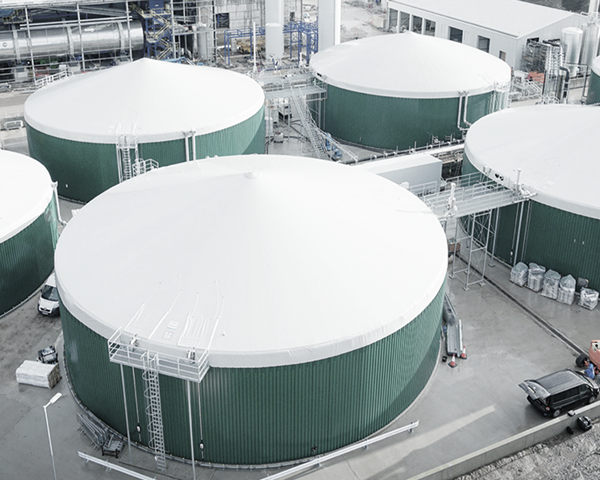
Anaerobic Digestion is divided into three main types reflecting the primary feedstock focus, as some plants will process multiple organic waste streams. Whilst facilities can also be defined by the use of biogas (and indeed by the size of the plant), in WikiWaste this is considered a configuration/technology option of a facility rather than type of AD. The three types as defined can be viewed individually or together to understand how food and other organics are treated across the UK.
Facilities receiving primarily source-segregated food waste from households and commercial collections, often under Local Authority or long-term commercial contracts. These plants typically have dedicated pre-treatment and de-contamination technologies.
Facilities treating primarily residual waste are relatively few in number, but were developed as an alternative to landfill and incineration for primarily household waste under Local Authority long term contracts. These plants have specific pre-treatment requirements and the digestate (often termed Compost Like Output) use on land is restricted by specific legislation.
Facilities primarily treating sewage at waste-water treatment plants handle a large proportion of sludge from the treatment process, but can also handle some other slurries and water-based organic wastes from businesses. The digestate (often managed the same as sewage sludge) use on land from these plants is restricted by specific legislation.
Over time, Professional-tier tools are expected to support comparisons between these types, including capacity, throughput, feedstock mix and links to Local Authority and commercial collection arrangements.
Schematic of AD Process
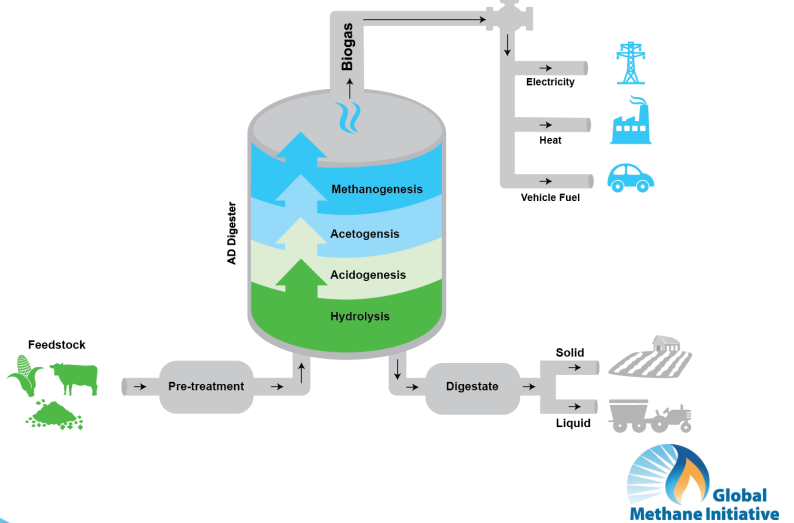
Feedstock can be agricultural slurries and crops, but WikiWaste focuses on food and animal wastes and sewage sludge.
The Process
The AD takes organic material through the following process:
- Waste reception and processing
- Waste slurry to one or more tanks depending on the feedstock
- Biological Process in Digester (which may be in stages in one or more tanks)
- Collection of gas in digester tank or dedicated tank depending on scale and approach
- Biogas to engines for electricity and heat generation and/or
- Biogas to clean up for vehicle fuel or injection into the gas grid
- Digestate to land
Historical Context
The growth in AD was triggered by two main factors.
Firstly the introduction of subsidies to encourage the production of renewable power (including the ROC and FIT regimes) made many processes more economically viable/attractive.
Secondly the increase in landfill tax made the diversion from landfill economically attractive.
It is debateable that targets to divert biodegradable municpal waste from landfill delivered delivered growth in the AD market in and of themselves.
Potential Increases in Food Waste
The introduction of Simpler Recycling in England and similar initiatives in other countries of the UK requires the separate collection of food waste (unless a compelling argument can be made against this under TEEEP - in which case it may be collected with green waste and sent for treatment to IVC).
As a result it is likely that food waste collected and sent to AD will increase over the coming years.
Links to
Anaerobic Digestion is designed to be read in context with other parts of WikiWaste:
- Local Authorities – showing which disposal and collection authorities send food and other organics to AD facilities, and how this relates to wider organics strategies.
- Systems & Operations – connecting AD back to collection systems, contracts, gate fees and service configurations for food and organics.
- Waste Types – linking waste types such as food waste, sewage and certain commercial residues into the AD facilities that handle them.
- Organisations – associating facilities with operators, Local Authorities, regulators and sector bodies involved in permitting, incentives and policy.
Facility pages indicate where Professional-tier tools are available, including mapped locations, tonnage time-series and simple rankings by throughput or capacity. This allows users to move from:
- a single AD facility to the authorities and contracts linked to it;
- particular organics streams to the AD and composting routes they use; and
- more detailed analyses of regional AD capacity and coverage.
Purpose
Use this page to understand the main AD types, see how they connect to collection systems and Local Authorities, and navigate to facility- and organisation-level views where data is available.
Approach
The Anaerobic Digestion layer focuses on facilities that accept organic wastes for biological treatment, producing biogas (for electricity, heat or upgrading for injection into the gas grid or vehicle use) and digestate that can be returned to land or further processed. These routes help divert organics away from residual waste streams and landfill.
Within WikiWaste, this category aims to:
- Group AD facilities into clear, related types based on primary feedstock and biogas use
- Link waste-based AD plants to Local Authority and commercial collection systems that supply them with food and other organic waste.
- Connect AD routes back to the Waste Types section, including household food waste, commercial food waste, sewage, slurries and other organics.
- Highlight tonnage and capacity data where available, noting when figures were last updated and data scope.
Facility pages will indicate the scope of data available for each plant, for example whether inputs, outputs, capacities and performance metrics are present together with the year .