

End of Life Vehicles (ELV)
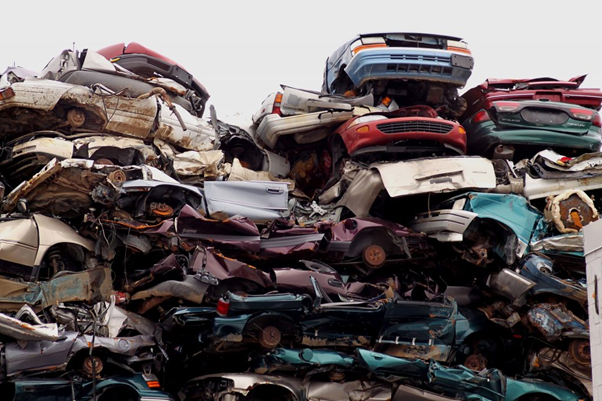
The introduction of the End of Life Vehicle Regulations in 2003 means that every year around 2 million End-of-Life Vehicles (ELV) are processed to ensure that potential pollutants such as fuel, oils, brake fluids and other liquids are removed, collected and stored[1] as part of a decommissioning process.
These wastes are ultimately treated or disposed of, with the decommissioned vehicle shredded to produce Automotive Shredder Residue (ASR) for subsequent recycling and recovery.
Discarded Vehicle Waste Arisings by Economic Classification (UK 2020)
Discarded Vehicle Waste Arisings
- 1,750.70 thousand tonnes (UK 2020 per above)
- 1,626.22 thousand tonnes (England 2020)
- 92.9% of tonnage was from England
Data source: [2]
Discarded Vehicle Waste Arisings (Waste Category and Economic Classification)
Commercial and Industrial* | UK 2020 | England 2020 | England 2022 |
|---|---|---|---|
Manufacturing | 0.01 | 0 | 0 |
Water Treatment | 0 | 0 | 0 |
Services | 1,745.11 | 1,625.68 | 1,307.83 |
Total | 1,745.12 | 1,625.68 | 1,307.83 |
% Total and % England | 99.7% | 93.2% |
Municipal Solid Waste* | UK 2020 | England 2020 | England 2022 |
|---|---|---|---|
Services | 1,745.11 | 1,625.68 | 1,307.83 |
Household | 0.76 | 0.55 | 0.89 |
Total | 1,745.87 | 1,626.22 | 1,308.73 |
% Total and % England | 99.7% | 93.1% |
All figures in thousand tonnes. Data source: [2] * See data limitations.
Context and Classification
End-of-Life Vehicles are regulated to limit the environmental impact of their disposal by reducing the amount of waste when they are scrapped.
The EWC codes prefixed 16 01 (16 01 03 to 16 01 99) capture the waste from End-of-Life Vehicles.
The End of Life Vehicle Regulations 2003 (as amended) and the End of Life Vehicle (Producer Responsibility) Regulations 2005 (as amended) are the underpinning legislation applying to all cars with up to 9 seats and small vans of up to 3.5 tonnes[2].
ELVs are classified as hazardous waste in England and Wales and special waste in Scotland until depolluted and must be processed via an Authorised Treatment Facility (ATF). A list of all licensed ATFs in England are listed[3].
Producers must meet annual recycling and recovery targets for their brands, currently 95% recovery and 85% recycling. The Office for Product Safety and Standards (OPSS) has been appointed by DEFRA to enforce the regulations and their most recent guidance was published in February 2021[4].