

Solid Recovered Fuel (SRF) and Refuse Derived Fuel (RDF)
Solid Recovered Fuel (SRF) and Refuse Derived Fuel (RDF) are types of Waste Derived Fuel, with SRF being distinct from RDF in that its quality as a fuel is far superior.
SRF is typically used in processes that require a high quality, small particle size, high Calorific Value, low Moisture Content material – such as Cement Kilns. RDF typically has more limited processing and shredding in order to provide a uniform fuel to the specification of the end user - such as EfW plants.
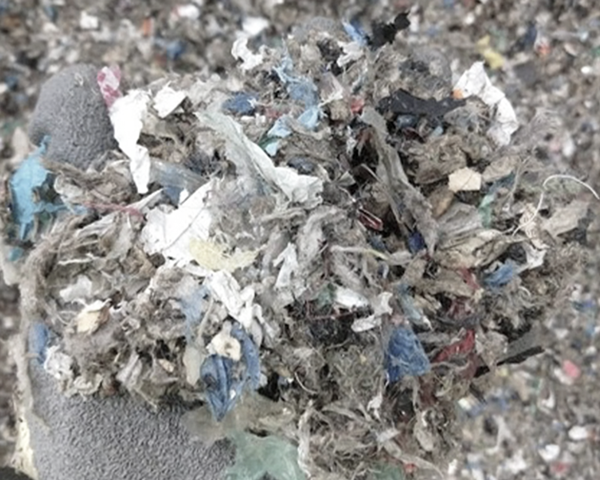
Types of Waste Derived Fuels
The three main types of Waste Derived Fuel are set out below, from the lowest speficiation on the left (RDF) to the highest specification on the right (SRF Pellets). The table below sets out the specification in more detail, but there is no standardisation applied to RDF specifications - they are set by the user under a Fuel Supply Agreement that specifies minimum calorific value, moisture content, the form and the quantity of the RDF.
For the purposes of legislation though, RDF, SRF and SRF Pellets remain waste (unless stringent End of Waste Criteria can be met) and so users of the fuel have to comply with the Industrial Emissions Directive.
RDF

RDF, at the most basic level, will have had some metals and inert materials removed, removal of some recyclables and limited shredding/bag splitting.[1][2]
SRF
Solid Recovered Fuels are covered by international technical specifications which set, amongst other parameters, the chemical and physical parameters of an SRF [3].
SRF Pellets

The development of SRF pellets is an emerging market, typically taking an SRF feedstock and refining it to produce a pellet (typically 6mm, 9mm or 16mm) which has higher Calorific Value, lower moisture and lower ash content.
Composition of SRF and RDF Relative to Residual (Black Bag) Waste
The table below represents a number of different specifications that have been aggregated to give a feel for the specification of SRF and RDF relative to Residual (Black Bag) Waste. The specification, in reality, is set by the receiving plant, which the suppliers have to meet. The SRF Pellet specification is a part specification for illustrative purposes only.[4]
The Residual Waste range reflects Black Bag waste from Households which are at the lower range of Calorific Value and higher range of moisture, and from Commercial Waste/Businesses which are at the higher range of Calorific Value and lower range of moisture.
Measure | Units | Residual Waste | RDF | SRF | SRF Pellet |
|---|---|---|---|---|---|
Net Calorific Value | MJ/kg (as received) | 9 - 15 | 10 - 15 | >18.5 | 20 - 23 |
Moisture | wt% (dry basis) | 10 - 40 | <20 | <15 | <6 |
Biomass Content | wt% (dry basis) | >45 | >65 | >65 | |
Ash Content | wt% (dry basis) | 10 - 30 | <20 | <15 | <15 |
Sulphur | wt% (dry basis) | < 0.85 | <0.5 | <0.5 | |
Nitrogen | wt% (dry basis) | <1.5 | <0.8 | <0.8 | |
Lead | mg/kg | <200 | <100 | <80 | |
Chlorine CI | wt% (dry basis) | <1.2 | <0.8 | <0.6 | <0.6 |
Zinc | wt% (dry basis) | <0.1 | |||
Sodium and Potassium | wt% (dry basis) | <0.8 | |||
Mercury | mg/kg | <2 | <1 | <0.6 | |
Nickel | mg/kg | <200 | <100 | <100 | |
Thallium | mg/kg | <20 | <10 | <10 | |
Ferrous and non-ferrous metals | wt% (dry basis) | <7 | <3 | <1 | |
Non combustible material | wt% (dry basis) | <15 | <10 | <5 | |
Glass | wt% (dry basis) | <5 | <2 | <1 | |
Dust <1mm | wt% (dry basis) | <5 | <5 | <5 | |
Bulk Density (loose) | kg/m3 | 100 - 275 | 100 - 175 | 185 | 500 - 650 |
Particle Size (max dimension) | mm | 500 | 300 | <40 | 6 - 16 diameter |
Chlorine is a particular issue due to its tendency to form Hydrochloric Acid in an energy recovery process, which then requires specific abatement/clean-up technologies. With limited such arrangements in Cement Kilns this means that they generally have a lower tolerance for Chlorine closer in spec to an SRF.
In addition, the use of any Waste Derived Fuel in Cement Kilns has the potential to impact the final quality of the cement produced, and so the composition is critical in the decision to use it in such an application in terms of the ash content of the SRF fuel.
Destination of RDF and SRF Leaving Permitted Sites Located in England (2024)
The destination of EWC code 19 12 10 in million tonnes (source WDI)
Notes
- Of the 4.5 million tonnes sent to Incineration in the UK in the pie chart, around 67% went to Residual Waste EfW sites and 11% to Cement Kilns.
- The remaning 22% went to other treatment and transfer processes (this included facilites that further processed the material prior to use and this included the production of SRF pellets)
- The 1.8 million tonnes that left the UK was for energy recovery via Inicneration (inc. Cement Kilns). This does not correlate directly with more detailed data for the export of RDF and SRF set out below
- Historically some SRF and RDF has been labelled as EWC code 19 12 12. This is not shown in the pie chart, but totalled 1.2 million tonnes into Incineration (incl. Cement Kilns) in 2024
- Recent guidance by DEFRA[5] has clarified 19 12 12 should not be used for SRF and RDF
Background to Export
Historical Context
SRF and RDF started to be exported from the UK in 2009 and two papers document this up to 2014[6] and up to 2017[7].
Export outside the UK has been driven by a lack of capacity in the UK and the increase of landfill gate fees (driven by increased landfill tax) that has allowed material to be removed from landfill, processed and transported at a competitive rate
Tonnage dropped to a low in 2022 reflecting increased capacity in the UK, but also increased cost of export - including shipping, legislative compliance[8] and the introduction of taxes in some EU countries on incineration.
In 2023 some increase occurred to reflect increased demand in the EU.
Export of SRF and RDF Outside the UK from England
Source TFS[9] FOI for England only. Export data does not align with WDI data (per the pie chart above) primarily due to timing issues - export data shown is when tonnage is destroyed rather than when leaving sites.
Notes
- The export trend from England to countries outside the UK is captured in the graph from export data (England has also exported to other countries within the UK)
- SRF primarily goes to Cement Kilns and RDF to Residual Waste EfW, which in Scandinavian countries has a high focus on generating heat in the winter - creating some seasonal demand
Export Statistics
The export of SRF and RDF is set out in more detail in the linked pages below. This includes historical and current trends on the countries receiving the material, and the organisations exporting it.
References:
- DEFRA Guidance on how to Classify Mechanically Treated Wastes
- DEFRA RDF Market in England Respones to Call for Evidence (Dec 2014)
- SO/TC 300 Solid Recovered Fuels
- WKE Website SRF Fuel Spec
- Wastes from mechanical treatment of waste: how to classify (May 2025)
- Environment Agency Evidence: Reasons for Trends in English RDF Exports since 2010 (July 2015)
- CIWM Presidential Report: RDF Trading in a Modern World (2018)
- DEFRA Guidance: Waste Export and Import
- Transfrontier Shipment Freedom of Information requested in Oct 2025