

Cement Kilns
Cement Kilns use raw materials for manufacture (primarily limestone and clay) in a kiln where they are heated at high temperature to produce a ‘clinker’ which is then processed to produce a cement. Selected C&D Wastes and Mining and Quarrying Wastes have been progressively used to replace the raw materials, and selected combustible wastes (including tyres, SRF and hazardous Chemical Wastes) have been used to replace the coking coal traditionally used in firing the kiln process.
As all of the materials ultimately become part of the cement product the introduction of materials is carefully managed and monitored and materials need to meet defined specifications to ensure they do not compromise the process and the final product.
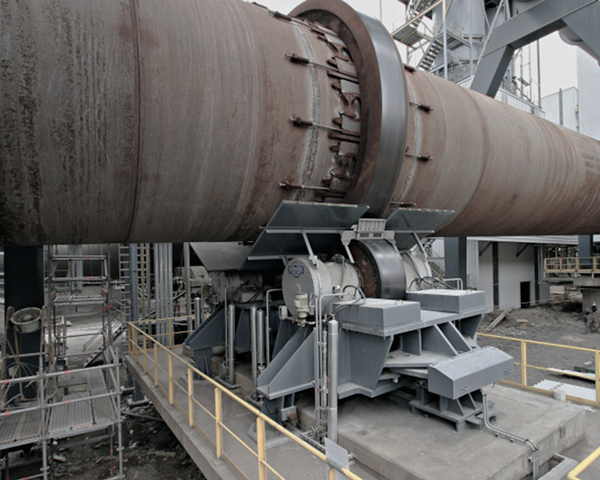
Overview
There are 10 operational Cement Klins and one Lime Kiln in the UK (all referred to as Cement Kilns in WikiWaste). In WikiWaste, Cement Kilns are treated as a distinct infrastructure type within the wider Incineration & EfW category.
This type of infrastructure provides the overview of Cement Kilns for the UK, linking to individual pages for each facility that provides greater detail.
Parameters
| Stats. | Units/Year | |
|---|---|---|---|
Number of Operational Facilities | 11 | number (2024) | |
RDF/SRF Tonnage | 652 | '000 tonnes (2024) | |
Liquid Fuel Tonnage | 91 | '000 tonnes (2024) | |
Other Waste Tonnage | 227 | '000 tonnes (2024) |
Tonnage of Alternative Fuel to UK Cement Kilns
Notes
- In addition to the tonnage shown, an average of c. 225 thousand tonnes of sludges, slags, fly ash and other materials were received each year into UK cement kilns
- Two cement kilns did not report any waste tonnage and South Ferriby was mothballed in July 2020
- The increase in alternative fuels has occurred despite a drop in the reported production of clinker of 3% for 2021 to 2022 and 11% for 2022 to 2023
Cement Kiln Map
Map Guide

Search sites

Zoom in/out

Reset Map

Toggle layers

View legend

Switch basemap

Click for details
_____________________
View full guide to maps
The Cement Making Process
Summary
There are six main stages of the manufacture of Portland cement [1]:
Stage 1
Raw Material Extraction: raw ingredients include limestone, sand and clay, shale, fly ash, mill scale and bauxite. Materials are mined, crushed and reduced in size.
Stage 2
Grinding, Proportioning and Blending: the production of a fine homogeneous mix with additives that comprises primarily around 80% limestone and 20% clay.
Stage 3
Pre-heating Raw Material: a pre-heating chamber using kiln 'exhaust' gases to reduce energy consumption and pre-condition the raw material into oxides.
Stage 4
Kiln Phase: the principle phase which produces a clinker, exiting the kiln in marble-sized nodules - it is the binder that is used in cement products.
Stage 5
Cooling and Final Grinding: the clinker is rapidly air-cooled and gypsum (and other active ingredients as required up to around 5%) is added to the clinker and ground to a fine power to produce cement
Stage 6
Packing and Shipping: the cement is conveyed from grinding mills to silos where it is then packed in bags.
Categories of cement materials
Some cement kilns send clinker for subsequent grinding, blending and packing at a different site. This might include, for example, the introduction of other materials, such as Blast Furnace Slag to produce a Blast Furnace Cement - a highly sulphate resistant cement that typically has around 65% granulated Blast Furnace Slag mixed with the clinker. Categories of cement materials under BS EN 197-1 [2] include:
Category | Description of Cement | Proportion of clinker | Proportion of other materials |
|---|---|---|---|
CEM 1 | Portland cement. | 95 to 100% | 0 to 5% |
CEM II | Blended cements (sub-divided depending on the material used, e.g. 'Portland fly ash cement', 'Portland slag cement, 'Portland limestone cement' etc). | 65 to 94% | 6 to 35% |
CEM III | Blastfurnace cement (incorporating ground granulated blastfurnace slags or GGBS). | 5 to 64% | 35 to 95% |
CEM IV | Pozzolanic cement (incorporating natural or synthetic pozzolanic material e.g. volcanic ash). | 45 to 89% | 11 to 55% |
CEM V | Composite cement (incorporating both GGBS and pozzolanic material). | 20 to 64% | 18 to 50% GGBS; 18 to 50% Pozzolanic material |
In 2023 the UK produced 6.357,000 tonnes of clinker (from a total listed clinker capacity of UK cement kilns of c.9,650,000 tonnes or 66% of capacity), leading to the manufacture and sale of 9,752,000 million tonnes of cement (including 1,266,000 tonnes of imported cement) by the five main companies in the UK. Imports by others and other cementitious materials (fly ash and GGBS) bought the total UK cementitious materials to 13,711,000 tonnes in 2023 [3]
Use of Waste - Historical Context
Context
Cement Kilns have increasingly focused on the replacement of virgin materials and fuel with waste materials to improve sustainability and reduce carbon emissions and overal costs.
The introduction of waste materials - or 'Alternative Raw Materials' as coined by the industry - can be as part of the kiln phase or the final grinding stage and it can be used as an additive.
The use of waste materials as a fuel in the process can be as part of the early-stage firing process or later stage process, the latter of which requires a higher specification fuel.
Cement kilns are an option for disposing of hazardous materials because:
- the temperatures in the kiln, which are much higher than some other combustion systems,
- the alkaline conditions in the kiln, afforded by the high-calcium input mix or ‘rawmix’ which can absorb acidic combustion products,
- the ability of the clinker to absorb heavy metals into its structure [6]
Increasing Scale
Waste Derived Fuel had already started to play a more significant role in UK cement processing, in line with other countries (especially in Europe).
It started with the use of solvent-based hazardous wastes, often referred to as Cemfuel and by some as a Recycled Liquid Fuel (RLF), which was being trailed at a substitution of 50% of traditional coal fuel (although at the time 100% substitution occurred in Belgium).
At around the same time shredded/chipped waste tyres were starting to also be used in some cement kilns as a Waste Derived Fuel as both the solvent based wastes and tyres had a high CV and attracted an income from taking them into a cement kiln.
In 1995 there were 20 'cement factories' in the UK producing around 15 million tonnes a year of cement each year, with the cost of energy in the process representing 40 to 50% of running costs.
Trials were still running at this time with the ramifications of these trials captured in a Parliamentary Briefing Note [4].
By 1998 the Mineral Products Association (MPA) reported that 446,511 tonnes of waste by-products were used as fuel and raw materials, accounting for 4% of cement production and the proportion of fuel comprising waste was 5.7% [5].
By 2005 the range of alternative fuels had expanded in Europe to include tyres, plastic, paper, RDF/SRF, dried sewage sludge, meat and bone meal and some other waste streams, with fuel costs typically accounting for 30 to 40% of operating costs [7].
From 2009 export of RDF (and more commonly SRF due to its higher CV and more stringent specification) started from the UK to European Cement Kilns, This was driven by demand in Europe, a change n legislation allowing export, and Landfill Tax that made export commercially viable/attractive.
By 2010 the MPA reported that 1,528,315 tonnes of waste by-products were used as fuel and raw materials in UK cement manufacture, accounting for 7.2% of cement production and the proportion of fuel comprising waste was 39.7% [5]
By 2018 the MPA reported there were 12 cement kilns, with 1,414,195 tonnes of recycled content in UK cement manufacture, equivalent to almost 10% of cement production 2018. This same report noted that since 2013 the total waste used has didn’t vary by much more than +/-150,000 tonnes per year, and the proportion fuel comprising waste was 43% in 2018 and hadn’t changed by much more than +/- 1.5% since 2013 [5]
Ultimately cement kilns will move closer to 100% alternative fules, but there are a number of obsticles to overcome[8]