

Tyres
Waste Tyres, also known as End of Life Tyres (ELT) comprise both car, van and large vehicle truck tyres which are generally collected as a source-separated waste stream under EWC code 16 01 03.
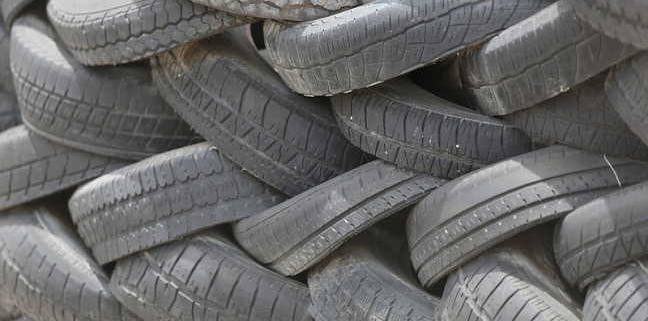
The Tyre Recovery Association estimate 40 million waste tryes are produced in the UK each year[1]. A recent Hansard publication[2] reported the UK disposes of around 600,000 tonnes of tyres each year. A BBC news item[3] reported the figure at closer to 700,000 tonnes per year, with both indicating around 300,000 to 350,000 tonnes being exported to India for disposal.
Differences in Data
The 700,000 tonne figure above compares to the most recent DEFRA data for the UK (2020 - 'Rubber Waste') of 237,297 tonnes. In that year England represented 131,800 tonnes (or 56% of the total) [4].
Export figures separately reported by the EA indicated around 98,000 tonnes of End of Life tyres were exported in 2023.
The difference in these figures are a result of the extensive use of an exemption from waste permitting T8 which allows for the handling of up to 60 tonnes of truck tyres and 40 tonnes of any other tyres in any 7 day period - waste exemptions do not require waste returns to the regulator i.e. they did not report the tonnage handled and therefore the tonnage is not captured in the reported DEFRA figures.
This approach to reporting tonnage will change in the future, with the EA publishing in July 2025 an intention to modify the relevant regulation with a requirment to record tonnage handled[5] under exemptions and the intention to the remove the T8 exemption within 3 months of the change to the regulation.
In 2024 the EA had just over 1,000 sites that had registered a T8 exemption.
Use of Waste Tyres
Notes
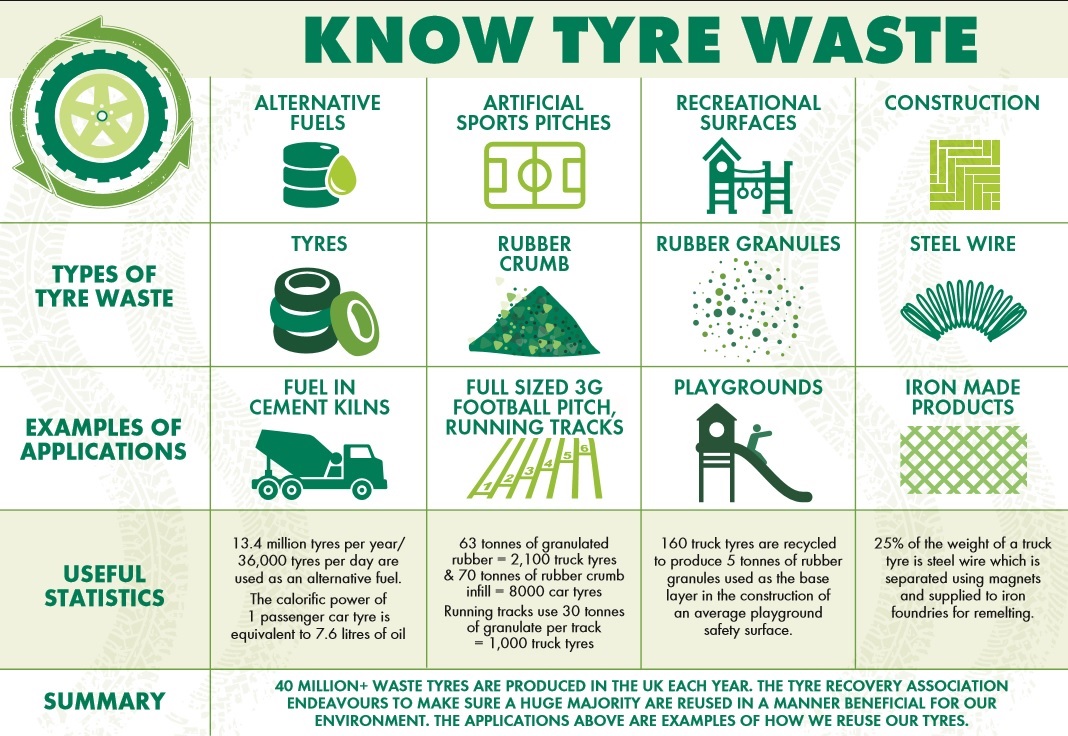
The graphic prodcued by the Tyre Recovery Association summarises the potential uses of waste tyres.
The preferred method of treating waste tyres is for source-segregated tyres to undergo a waste Recovery operation to produce tyre-derived rubber materials[6].
It is illegal to landfill untreated, whole tyres.
The Quality Protocol developed by WRAP in 2009 and updated in 2014 defines the End of Waste Criteria for the production of tyre-derived products. Once these have been met then waste tyres ceases to be waste as the material has been fully recovered[6].
Local Authority Waste
The Top 10 Authorities removing Paper & Card. Paper & Card includes the following sub groups of material: Paper, Card, Mixed Paper & Card and Books