

Healthcare Waste
Healthcare Waste is waste produced during human or animal healthcare, or related research activity, and covers both Clinical Waste and Offensive Waste [1] [2] [3] and requires specific management measures. Healthcare Waste containing radioactive materials requirements compliance with specific guidance[4].
The Healthcare Waste reported as generated by the most recent DEFRA data[5] was 355 thousand tonnes and, whilst relatively small in the context of total waste generation, is complex and requires specialist management. The tonnage captured in the DEFRA data excludes tonnages that are more broadly classified under Healthcare Waste guidance, but are captured in different parts of the DEFRA data (for example some medicines are captured as Chemical Wastes)
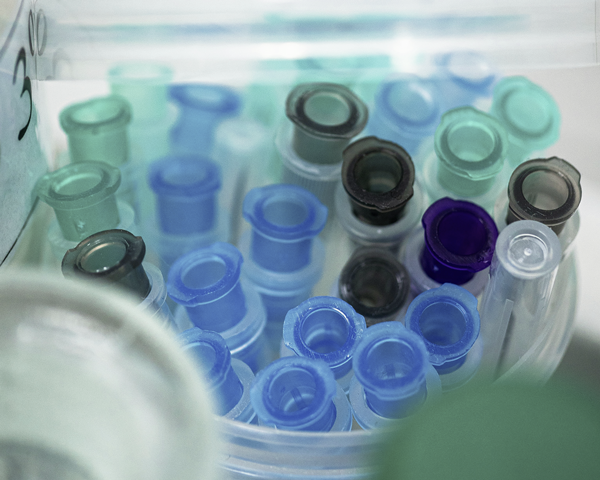
Types of Healthcare Waste
Healthcare Waste is generally defined[1] as Clinical and Offensive Waste, and the Management of Healthcare Waste is delivered via a category system of colour-coded packaging (whether bin lid, or bags used) as summarised, below, that has a complex set of EWC codes applied [6].
Clinical Waste
Clinical Waste is Healthcare Waste that:
contains viable micro-organisms or their toxins which are known or reliably believed to cause disease in humans or other living organisms
- contains or is contaminated with a medicine that contains a biologically active pharmaceutical agent
- Medicine is a drug or other preparation for the treatment or prevention of disease
- Cytotoxic and cytostatic medicine is medicine that possesses hazardous properties which are toxic, carcinogenic, mutagenic or toxic for reproduction.
- is a sharp, or a body fluid, or other biological material (including human and animal tissue), containing or contaminated with a hazardous substance
- A sharp is an item that could cause cuts or puncture wounds. This includes needles, hypodermic needles, scalpels and other blades, knives, infusion sets, saws, broken glass, and nails.
- is waste of a similar nature from a non-healthcare activity
Offensive Waste
Offensive Waste[3] is non-infectious waste which is unpleasant and may cause offence to those coming into contact with it. It includes:
- outer dressings and protective clothing e.g. masks, gowns and gloves that are not contaminated with body fluids
- hygiene waste and sanitary protection e.g. nappies and incontinence pads
- autoclaved laboratory waste.
- falls within EWC waste codes 18 01 04, 18 02 03 or 20 01 99.
Offensive waste does not include:
- sharps
- anatomical waste e.g.body parts, organs or blood
- chemicals, medicines
- dental amalgam
- any waste that is infectious (i.e. a clinical waste)
UK Healthcare Waste Arisings
Total Healthcare Waste Arisings 354.84 thousand tonnes (data for 2022 England only). Data source: [5]
Healthcare Waste Arisings by Economic Classification
Economic Classification | UK 2020 | England 2020 | England 2022 |
|---|---|---|---|
Agricultural | 1.50 | 1.02 | 1.00 |
Mining & Quarrying | 0 | 0 | 0 |
Manufacturing | 1.67 | 0 | 0 |
Water Treatment | 0 | 0 | 0 |
Services | 345.02 | 237.46 | 234.21 |
Households | 6.63 | 0 | 0 |
Construction | 0 | 0 | 0 |
Total Arisings | 354.84 | 238.48 | 235.21 |
England as % of UK | 67.2% |
All figures in thousands. The data only inlcudes 5 of the EWC 18 chapter codes, with medicines and other 18 chapter codes listed as, for example, Chemical Wastes. Data source: [5]
Management of Healthcare Waste
Summary
The management of Healthcare Wastes is set out in Healthcare Technical Memorandum 07-01 - Safe Management of Healthcare Waste[7] which replaced the Safe Management of Healthcare Waste in 2013.
Management of Healthcare Waste for regulated facilities with an environmental permit is the subject of guidance issued in July 2020 [1] by the EA which sets out appropriate measures in the following sections:
- When appropriate measures apply
- Definition of Healthcare Waste (as set out in the table below)
- Managing healthcare wastes
- General management appropriate measures
- Waste pre-acceptance, acceptance and tracking appropriate measures
- Waste storage, segregation and handling appropriate measures
- Waste treatment appropriate measures (including assessment and validation requirements)
- Emissions control appropriate measures
- Emissions monitoring and limits appropriate measures
- Process efficiency appropriate measures
Alternative Treatment
There are several types of Alternative Treatments (AT) available for the treatment of Healthcare Waste all of which must demonstrate that the Healthcare Waste is 'rendered safe'[7]. 'Rendered safe' means:
- demonstrates the ability to reduce the number of infectious organisms present in the waste to a level at which no additional precautions are needed to protect workers or the public against infection from the waste;
- destroys anatomical waste such that it is no longer generally recognisable;
- renders all Clinical Waste (including any equipment and sharps) unusable and unrecognisable as Clinical Waste;
- destroys the component chemicals of chemical or medicinal and medicinally-contaminated waste.
Such treatments include and are detailed on separate WikiWaste pages:
- Autoclaving
- Microwaves
- Irradiation
- Chemical Disinfection
- Dry Heat
- Thermal Disinfection
Mechanical Treatment is also available as a pre-treatment option for any of the AT's outlined above. By pulverising, shredding, crushing etc the waste this results in a reduction of the volume of the waste although it does not kill any pathogens or microorganisms.
Incineration of Clinical Waste for England (all EWC 18 chapter codes)
The graph to the left shows the trend for different types of incineration of Healthcare Waste for England, plus the small amount that was exported for incineration.
Some Residual Waste EFW incinerators are able to dispose of specific Healthcare Waste streams.
During the COVID-19 pandemic the EA published a Regulatory Position Statement (RPS C23) clarifying the circumstances where a wider range of Healthcare Waste (including COVID-19 waste) could be incinerated with Municipal Waste (MSW) which expired in July 2021[8].
NHS (England) Management of Healthcare Waste
The NHS report their management of Healthcare Waste via the Estates Returns Information Collection (ERIC) dataset[9] which gives a breakdown of the tonnage, management approach, and associated cost of waste.
Two Residual Waste EfW (termed 'Clinical to MSW') have dedicated Clinical Waste capability.
Offensive Waste (tiger bags) to Residual Waste EfW has increased, with overall tonnages reduced as the NHS pursues its strategy to increase recycling and divert waste away from HTI and Clinical Waste Incineration[10].
Types of Healthcare Waste by Packaging Colour
The types of Healthcare Waste are grouped and designated by packaging colour (can be bag colour or lid colour) are summarised below, with more detail in ref[6]
Orange
Appropriate Management: Alternative treatment or incineration
Wastes:
- Infectious waste, not contaminated with chemicals or medicines
Yellow
Appropriate Management: Storage and incineration
Wastes:
- Infectious waste contaminated with chemicals and/or medicinally contaminated (not cytotoxic or cytostatic)
Red
Appropriate Management: Storage and incineration
Wastes:
- Infectious anatomical waste, chemcially preserved and not chemcially preserved.
- Non-infectious chemically preserved and not chemically preserved
Purple
Appropriate Management: Storage and incineration
Wastes:
- Cytotoxic and cytostatic medicines, and infectious waste contaminated with cytotoxic and cytostatic medicines
Blue
Appropriate Management: Storage and ininceration
Wastes:
- Other waste types excluding cytotoxic and cytostatic medicine
Black and Yellow Stripes (tiger bags)
Appropriate Management: Storage, incineration or landfill (incineration in Residual Waste EfW possible)
Wastes:
- Non-infectious offensive waste. Commercial, separately collecte dfractions of absorbents, wiping cloths and protective clothing not contaminated by infectious substances
Not Specified
Appropriate Management: Storage, disposal or recovery at a suitable authorised facility
Wastes:
- Non-infectious sharps, not contaminated with chemicals or medicines
- Water and solvent based developer and activator solutions
- Fixer solutions (incl. bleach fixer solutions)
- Photographic film and paper (with and without silver compounds)
- Amalgam and lead foils from dental care
- Infectious and non-infectious gypsum wastes (ie plaster casts and moulds)
Purpose
This category is page-specific and brings together information about Healthcare Wastes across different sectors into a single page for reference.
Approach
Pet Crematoria and Hospital Small Emitters (HSE) process relatively small tonnages and currently excluded from WikiWaste.
Each incinerator in WikiWaste has a dedicated page, and if handled, identifies Clincial Waste tonnage received.
References:
- Definition of Healthcare Waste (Environment Agency July 2020)
- Definition of Healthcare Waste (SEPA Net Regs for Scotland and Northern Ireland)
- Waste (SEPA Net Regs for Scotland and Northern Ireland)
- Radioactive substances from hospitals, universities and industry (Environment Agency Permit Approach December 2021)
- UK Statistics on Waste
- Types of Healthcare Waste by Packaging Colour
- Health Technical Memoranda (NHS Page linking to key PDF documents)
- COVID-19 RPS
- NHS Estates Returns Information Collection (ERIC)
- NHS England March 2023)