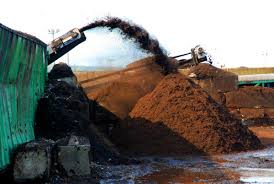

Windrow Composting
Also known as Open Air Windrow Composting (abbreviated to both OAW and OWC) facilities primarily treat green and garden waste in open windrows, typically under permit conditions that largely exclude animal by-products and food wastes.
Waste is shredded, stacked in windrows (long narrow rows), and then regularly turned to ensure mixing and optimisation of natural biological processes in aerobic conditions (aerobic digestion); ultimately producing a compost output/soil improver for use on land and in landscaping. This type of infrastructure provides an overview of Windrow Composting facilities for the UK, linking to individual pages for each facility that provides greater detail [in the future].
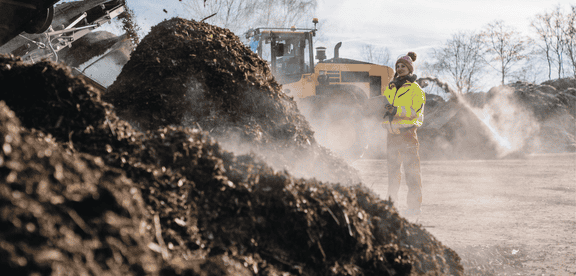
Overview
Windrow Composting facilities treat green and garden waste to produce soil compost and soil improvers that can be used in agriculture, horticulture and landscaping. The treatment process is relatively inexpensive and takes between 12 to 16 weeks from receipt to production of the compost/soil improver.
In WikiWaste, Windrow Composting is treated as a distinct infrastructure type within the wider Composting category. This page provides a structured view across the national fleet and in the future will connect through to individual facility pages and Local Authority disposal routes
Parameters
| Stats. | Units/Year | |
|---|---|---|---|
Number of Operational Facilities | 150 | number (2024) | |
Tonnes Received | 5,000 | '000 tonnes (2024) | |
abc | 00 | xyz (2024) | |
abc | 00 | xyz (2024) | |
abc | 00 | xyz (2024) |
The Process
Overall Process
The overall process of windrow composting is broadly the same, whether undertaken at home or at commercial scale in dedicated facilities that are permitted for treatment.
However, waste facilities must meet certain operational standards (for installations up to 75,000 tonnes per year[1] and for recovery operations up to 35,000 tonnes per year [2] although in many cases the size of the operation is between 20 to 30,000 tonnes per annum).
In order for the compost/soil improver to meet End of Waste Criteria ( in the majority of the UK, this is demonstrated by meeting the Quality Protocol for compost and the associated Quality Standard PAS100.
Compost products and soil improvers are being increasingly used to reduce the demand on peat based composts(peatlands provide efficient carbon storage and unique habitats that many are striving to protect[3]) although some barriers are still being overcome to wider adoption[4]
Differences between OAW and IVC
There are two key differences between Open Air Windrow and IVC Composting:
- IVC can reach higher temperatures that can be more accurately controlled than in Open Air Windrow Composting - which results in the destruction of potentially harmful bacteria found in meat or other Food Waste which may have come in contact with meat.
- IVC occurs in a sealed unit rather than in the open. This means that materials can reach and consistently maintain high temperatures for the required minimum period of time and keeps the material away from outside influences such as weather and wildlife and complies with the management requirements of Animal By-product Material
As a result of the above OAW are not able to accept food waste.
Sites OAW are often located in agricultural and less rural locations, with a general requirement to locate at least 250 meters from householders to reduce the risk of airborne dust and spores impacting people.
The 4 key stages of the process are set out below.
Stage 1: Shredding and Material Preparation
Green Waste is delivered to the site (which has to have an Environmental Permit) and large items of contamination such as plastic, metal etc. are removed. The material is then shredded to produce a uniform particle size which has a structure to allow air to pass through it during the treatment process.
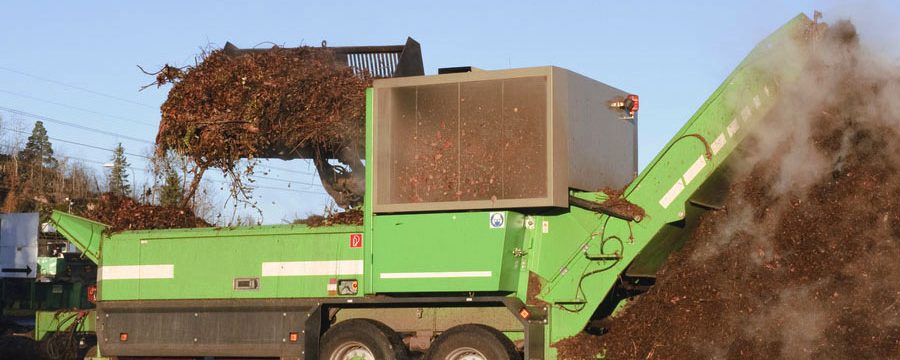
Stage 2: Windrow Preparation
The shredded material is then placed into piles in long rows known as ‘windrows’, in the open air. The composting process is kick-started by naturally occurring micro-organisms already in the waste. They break down the material, releasing nutrients (and producing heat and some steam) and in doing so they increase the temperature up to around 65oC needed to kill pathogens and weed seeds and meet the criteria for the final product quality specification. There are three discreet phases in the overall process which is set out in more detail in PAS100 but which is typically:
- Sanitation - temperature must be held above 65°C, for at least 7 days, and turned at least twice.
- Stabilisation - temperature maintained above 55°C, managed for 10 weeks, and turned at least 6 times.
- Maturation - Post-screening (stage 4 below) the product is generally stored for at least 4 weeks before it can be used.
Rainwater that falls onto the windrows typically produces a very weak concentrate leachate that is collected and is either recirculated into/onto the windrow to main biological activity, or is disposed of to a water treatment works.
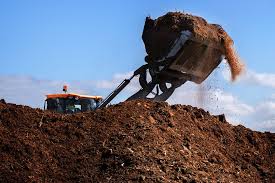
Stage 3: Open Air Windrow Processing
Each windrow is individually monitored and when the required temperature has been reached and held for the required time at each stage it is then turned to mix the material and ensure an even distribution of the composting process and to introduce sufficient oxygen to ensure the process does not turn anaerobic. The turning of the windrows may occur up to 8 times or more before a stabilised compost is produced. The turning process can be done with simple tractor/shovel type machines, or dedicated turning machines that introduce some additional mechanical breakdown of the material.
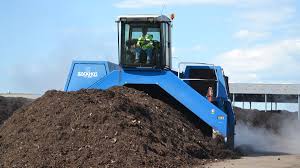
Stage 4: Screening and Final Product Production
Stabilised material is screened, and any remaining contaminants removed, to produce a range of product grades for various end uses such as soil conditioning/a soil improvement material providing it meets the Quality Standard PAS100 which dictates the process standard to ensure that it meets End of Waste Criteria. Any large materials that have not fully broken down in the process (such as larger branches) are taken from the screening process and re-introduced back into the process as outlined above. If large pieces build up over time they are often sent to a Biomass EFW facility.
The different grades of compost can be used for different purposes. Some grades are used as agricultural soil conditioners, others as mulches and others are suitable for landscape gardening or finer grades can be used on golf courses. In some cases the material is blended with other material (for example sand) to produce other products for horticultural use.