

Hillingdon Clinical Waste Incinerator
The Clinical Waste Incinerator is located at the Hillingdon Hospital.
In 2024 the plant was undergoing the commissioning of a new facility under the operation of Medisort. The NHS Trust is currently looking[1] for a new operator after Medisort left the project in 2024. The capacity of the new plant is understood to be the same as the old plant at 8,000 tonnes per year[2].
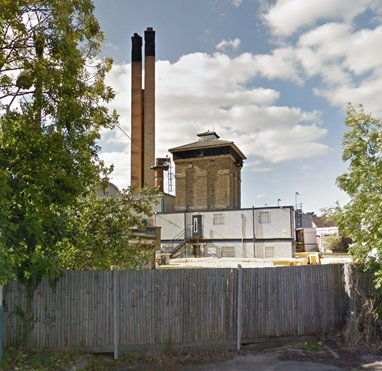
Site Details
| Operator | Medisort |
|---|---|
| Site | Hillingdon Clinical Waste Incinerator |
| Permit No | YP3004SE |
| Plated | 8000 |
| Status | Under Construction |
Plant Description (original plant)
Waste is loaded mechanically into the Primary Chamber using a hydraulic lift and tip arrangement, to avoid any manual handling of the waste[1].
The waste is chargeed into the incinerator where the combustion process commences via a conventional pulse hearth technology.
The clinical waste is burnt at a minimum temperature of 850°C for all categories of clinical waste except cytotoxic/cytostatic wastes which are burnt at a minimum of 1000°C, to produce an ash.
The residues are then dropped into an ash quench pit at the end of the process before being transferred into a skip.
The flue gases from the incineration process then pass through a secondary chamber, or afterburner, where any gaseous products of combustion are burned out under oxygen rich conditions.
This stage is designed to destroy any Carbon Monoxide, volatile organic compounds, and Dioxins and dioxin-like compounds and furans produced by the combustion process in the primary chamber.
The flue gases are then cooled by directing them through a waste-heat boiler and economiser, before they pass into the final, abatement section of the process.Powdered lime (Calcium Hydroxide) and powdered activated carbon are added to the flue gases entering the abatement process to remove acid gases, heavy metals and residual dioxins and furans before discharge to atmosphere from the stack.
The flue gases being discharged from the stack are continuously monitored for Hydrogen Chloride, Sulphur Dioxide, Carbon Monoxide, Oxides of Nitrogen, particulate matter (dust), Volatile Organic Compounds, oxygen, ammonia and nitrous oxide.
The incineration process produces two residues; bottom ash and spent lime.

References:
- Procurment Documentation Oct 2024
- Annual Report 2024 - only limited tonnage was combusted, and in the previous several years tonnage was transferred out while the new plant was in development