

Combustion
Combustion is the thermal treatment of waste material in the prescense of oxygen in a furnace or kiln under controlled conditions. It is the most common form of approach to inicneration[1] of wastes in the UK, and consequently is sometimes referred to as 'conventional' combustion.
Combustion processes typically operate at between 800 and 1450 degrees - the top end of the range commonly referred to as High Temperature Incineration.
Combustion of waste is generally linked to the production of steam which is then either used in adjacent industrial processes or converted in the incinerator to produce electricity and heat.

Energy from Waste Plant using Combustion Approach
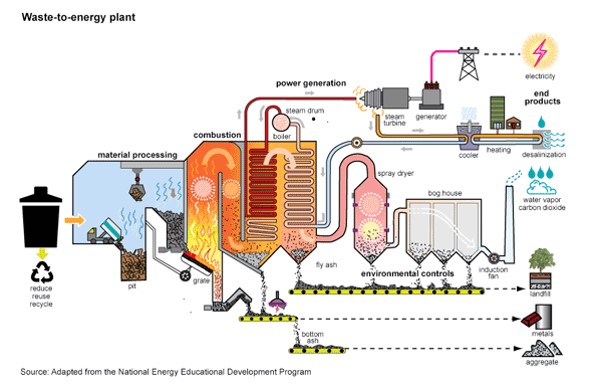
The large majority of incinerators in the UK are based on 'conventional' combustion, with greater detail set out on this page in WikiWaste.
The primary type of kiln/reactor is based around different Grate technologies.
Air is introduced above and beneath the Grate in carefully controlled amounts to ensure proper Combustion. Good combustion is needed to manage the emissions from an incinerator. The hot gases which are released are then directed to a boiler to recover the heat. The combustion gases are then cleaned in several stages to strict standards set by the Industrial Emissions Directive
However, some incinerators have utilised forms of Fluidised bed Technology to introduce the oxygen to the waste material and those incinerators focused on Hazardous Waste have been most successful when based on a Rotart Kiln technology.