

Ellesmere Port Incinerator
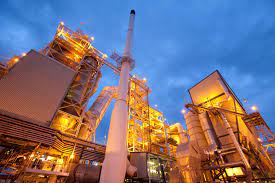
Ellesmere Port is the largest High Temperature Incinerator site in the UK, permitted to handle up to 100,000 tonnes a year[1].
Operated by Veolia, the facility id designed treat hazardous waste and low level radioactive waste, and is one of the most advanced in Europe.[1] It celebrated its 30th anniversary on 30th September 2020 [2].
Site Details
| Operator | Veolia |
|---|---|
| Site | Ellesmere Port Incinerator |
| Permit No | SP3409LC |
| Plated | 100000 |
| Size | Extra Large |
| Status | Operational |
| Last Updated | 2021-07-14 |
Plant Description
The facility is based around a water-cooled rotary kiln which rotates at between one and six revolutions per hour, giving a waste residence time of between 30 and 90 minutes at a temperature of up to 1200°C. The slag that is produced, a form of IBA, flows to a water quench system to produce a inert, glass-like solid.
Exhaust gases from the rotary kiln pass into the Secondary combustion Chamber, where liquid waste and oxygen is added to create a vortex. Residence time is in excess of 2 seconds, and temperatures of up to 1200°C are achieved to manage waste destruction.
The site has 2,000m³ covered storage area for packaged waste that is ready for incineration.The plant has a specialist shredder which is fully enclosed process to contain the material being processed. The process reduces the size of drums, IBCs and bulk bags to a paste, which is then sent to to the rotary kiln via a mixer and pump system.
Gas Cleaning and Scrubbing
Gases from the Secondary Combustion Chamber pass into a pair of gas heat exchangers, reducing the temperature to around 800°C, followed by quenching to 80°C to minimise the production of dioxins.
Gases from the from the process pass through two scrubbing towers to remove hydrochloric acid, oxides of sulphur, bromine and some inert particulates. The gases then pass through a filter fabric. Lime is added to aid the filtration and the final particulates and residual acidity are removed.