

Asbestos
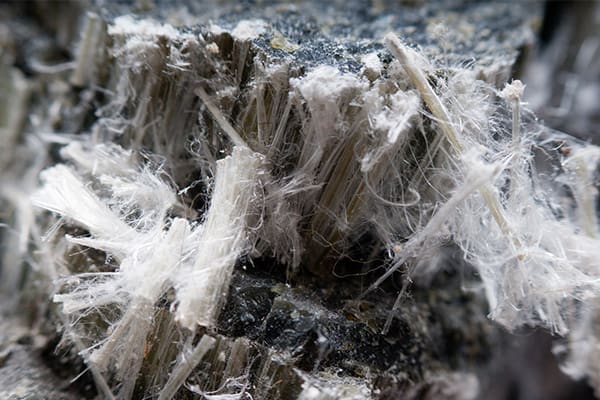
Asbestos is a group of six naturally occuring minerals made up of heat resistant fibres[1]. Asbestos fibres do not dissolve in water or evaporate, they are resistant to heat, fire, chemical and biological degradation and are mechanically strong[2].
Asbestos was widely used in construction as an effective insulator, and it can be added to cloth, paper, cement, plastic and other materials to make them stronger. Yet when asbestos dust is inhaled or ingested, the fibres can become permanently trapped in the body. Over decades, trapped asbestos fibres can cause inflammation, scarring and eventually genetic damage. Exposure to asbestos can cause cancer and other health conditions.
A rare and aggressive cancer called mesothelioma is almost exclusively caused by asbestos exposure. Asbestos also causes a progressive lung disease called asbestosis.
Introduction
Although asbestos comes from all over the world, the main exporters are Russia, Kazakhstan and China and it was once mined throughout North America. Asbestos may be found in large deposits or as contaminates in other minerals such as talc and vermiculite. Chrysotile asbestos is usually found as veins within serpentine rock. While most commercial asbestos deposits contain 5% to 6% asbestos, some deposits, such as the Coalinga deposit in California, contain 50% or more asbestos[1].
Asbestos is generally divided into two sub-groups; serpentine and amphiboles.
Serpentine asbestos (chrysotile or white asbestos) was the most commonly used type of asbestos. Chrysotile asbestos fibres are soft, flexible and curved and far less hazardous than the amphibole type.
Amphibole fibres (crocidolite -blue asbestos, amosite- brown asbestos, tremolite, actinolite and anthophyllite) are brittle fibres and are often rod- or needle-like in appearance. It is this form that is more hazardous to health. Crocidolite was the most commonly used amphibole asbestos in the past[2].
The importation, supply and use of all asbestos has been banned in the UK since 1999; the amhibole type has been banned since 1985[2]. Prior to use being banned, asbestos was used in many products including insulation material for buildings, boilers and pipes, car brakes, floor tiles and in 'artex' wall and ceiling decoration.
Solid and fibrous asbestos occurs in a variety of differing forms which need to be managed by different means according to its risk; not all asbestos materials present the same risk i.e. the measures that need to be taken for controlling the risks from materials sush as pipe insulation are different from those needed in relation to asbestos cement[3].
Types of Asbestos
There are six mineral types of asbestos and these are split into two main classes of asbestos: Serpentine and Amphibole.

References:
- Asbestos
- Government Information
- HSE
- National Asbestos Helliline
- Health and Safety Executive
- HSE
- Waste Classification Guidance on the classification and assessment of waste - Technical Guidance WM3
- HSE